
St. Louis City Busted Mugshots
St. Louis City stands apart from St. Louis County. It is an independent city, which makes it a county-equivalent jurisdiction with its own records. So a search hit from the county is not a City Justice Center record. The two systems simply do not share bookkeeping. After an arrest by the St. Louis Metropolitan Police Department (SLMPD), a person typically goes through prisoner processing first. From there, custody transfers to the City Justice Center. The City Division of Corrections runs that detention operation, while the Sheriff's Office handles court security, civil process, and transport rather than jail management.
A booking photo is simply the image made when an agency takes one during booking. The booking record tracks that custody event in writing. The officer who makes the arrest, the prosecutor, and the court each play distinct parts, and outcomes can shift as a case moves. A custody result and a court disposition are different records, and one should never stand in for the other.
St. Louis City Booking Record Fields
The official locator often shows an operational snapshot, not a full case file. City rules require an exact match on first and last name. When a search hits, the detail view can hold a lot: arrest and release times, the charge, a case number, next court date, status, bond details, and a photo area. Some fields may sit empty. Two cautions apply. A name match alone proves nothing about identity, and a release time says nothing about the charge's outcome.
| Field | What it can show |
|---|---|
| Name and year of birth | Search and identity clues. Use them carefully because similar names are not interchangeable. |
| Facility | The displayed City Justice Center location or another facility field, not necessarily the arresting agency. |
| Arrest or release time | An intake or release event, not a final legal result. |
| Charge and case number | Booking-stage charge text and a route to later court research. |
| Status, court date, and bond | Custody or scheduling information that can change after a court action. |
| Photo availability | A public slot may show an image or an unavailable-photo notice. It is not a promise that every record has a releasable image. |
What does "booking" mean? It records a person's identity and custody details after an arrest or similar criminal-process event. Arraignment comes later, in court, to address the charge. Bond is a release condition a judge sets. Disposition is how the court finally resolves the case.
SLMPD's internal mugshot-recognition policy confirms booking images have controlled investigative uses. That still creates no public image search. When no photo appears, the reason could be that the locator does not display one, the record was never released, another agency holds it, or none exists. Ask for the actual record rather than trusting that an image online is complete or official.
St. Louis City Booking Photo Requests
No photo in the locator? Or the person has already left the live view? A narrow public-record request is the better route. The SLMPD Records Service Center takes online and in-person requests, and the Sunshine Law Unit lays out the city's written-request path. Ask for the booking record plus any electronic booking photograph the responsible custodian holds and can release. Name the record type clearly, because arrest reports, booking sheets, release records, and photos can each be stored and reviewed under different rules.
- Open the SLMPD public-record portal or use the Sunshine Law request instructions.
- Give the full name, known spelling variants, date range, arresting agency, and any booking or case number. Include a date of birth only when it is already known and needed to separate similar names.
- Request the existing booking record and electronic booking photograph separately. Ask for electronic delivery, segregable nonexempt portions, and a fee estimate before substantial work.
- Keep the request ID and response. If an office does not hold the record, ask which custodian does and what search terms or exemption supported the response.
1915 Olive Street, first floor
St. Louis, MO 63103
Report information: 314-444-5551
Sunshine Law Unit: 314-444-5388
General hours: Monday through Friday, 8 a.m. to 4 p.m.
Missouri's Sunshine Law sets a firm clock. The agency must respond as soon as possible, and no later than the third business day. Miss that, and it owes you an explanation of the delay plus an estimated availability date. That deadline covers the response only. It does not promise every document lands in your hands within three days. On the SLMPD records page, report copies run ten cents per page, and locate-report research costs fifteen dollars per hour, prorated. None of that fixes a price for a photo, so request the actual estimate for the electronic image you want.
RSMo 610.026 governs copying and research fees. RSMo 610.100 draws its own line. It separates generally open arrest reports from investigative material that can stay closed while a case is active, and it allows protected details to be redacted. A request can target the nonexempt portion and ask for the legal basis behind any withholding. Note: A reply stating that no public photo is available does not by itself prove that no internal agency image exists.
St. Louis City Booking-Photo Rules
Photos are not handed out automatically in Missouri. The law sets the framework, not a guarantee. RSMo 610.100 covers arrest reports, detention records, and related categories, yet each agency still weighs exemptions and protected details before releasing anything. Juveniles sit outside this system entirely. Under RSMo 211.321, juvenile court files and certain officer records stay closed and separate.
Missouri's expungement statute matters here too. So does the state law on booking photographs, which defines the term and bars anyone selling criminal-record information from charging the subject to take it down or fix it. Neither law forces every image into public view. When an official record contains an error, take your documentation to the custodian and the court first. After a judge grants expungement, follow the statute and the court's procedures before asking any copied source to update its entry.
Corrections rarely ripple outward at once. A sealed court file does not erase old copies floating elsewhere. Missouri offers three distinct routes: an official correction, a court expungement, or a third-party site's free correction process. Keep your paperwork and start with the government custodian. An online page bearing a county label is not the city record itself, so treat it with care. For anything tied to a St. Louis City event, the City Justice Center and SLMPD are the systems that matter.
Timing also has limits. State retention schedules set minimums only, and none pins down a firm City Corrections destruction date. The State Archives hold older prison photographs from Missouri's past, but that collection is not a live feed from the City Justice Center. An old state custody image should never be passed off as a fresh city booking just because the person has a St. Louis tie.
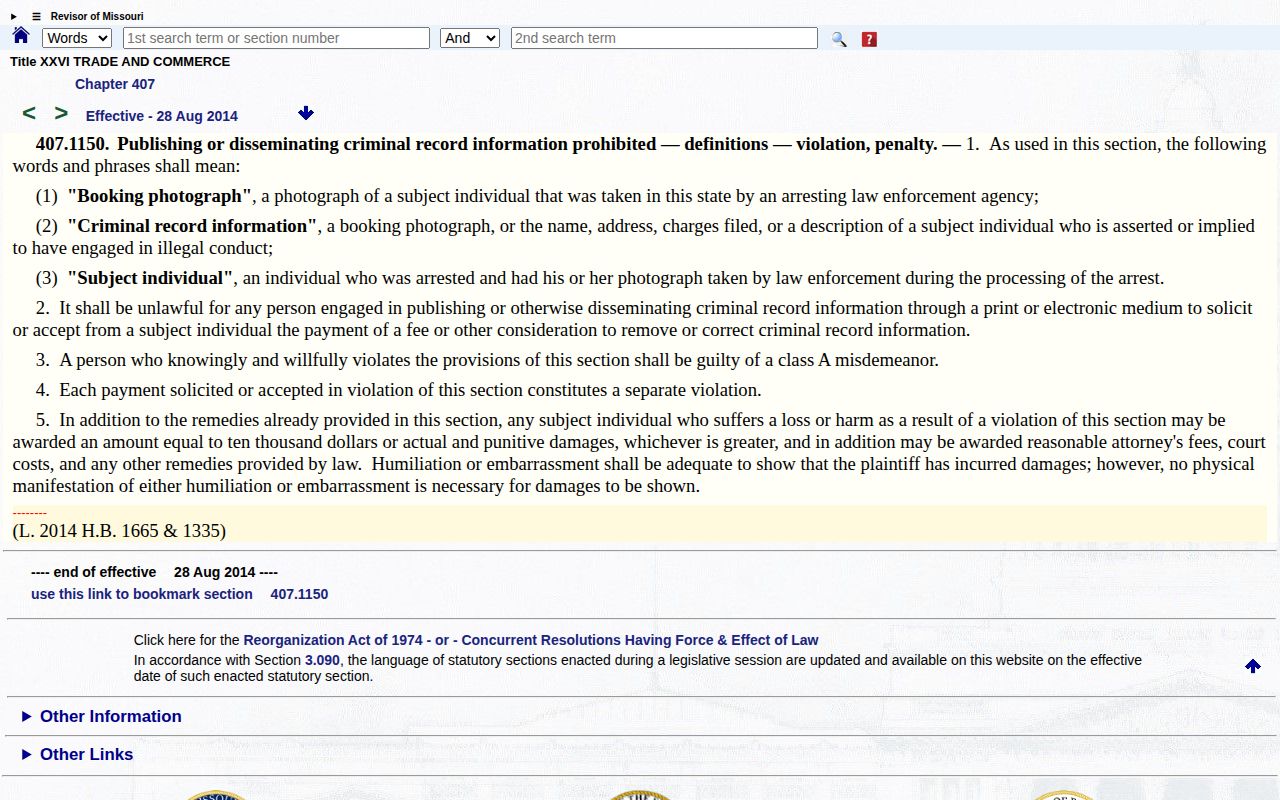
This statute frames how records get handled and corrected. It does not prove that any particular photo is public or accurate. Treat it as the rulebook, not the answer.
Find St. Louis City Busted Records
Start with the city's own tools for a current arrest. Read the inmate-locator instructions first. Then run the direct City Justice Center locator. An empty result is not the end of the story. The person could still be in SLMPD custody, waiting at a substation for transport, already released, or searched under a different spelling. Always check the jurisdiction and the facility shown before calling a result a city record.
- Search the Active Inmates view with the exact first and last name used by the official instructions.
- Check Released in the past 72 hours when the arrest may have ended in a recent release. Record which view and date you used.
- If the person may still be in early police processing, contact SLMPD Prisoner Processing at 314-241-8339 rather than assuming the jail locator is complete.
- Use a displayed case number or court date to check the appropriate court docket. If a photo or underlying report is needed, use the records-request route.
A broad no-name search can pull current results, but it invites mix-ups. People with similar names get confused fast. You may also collect details you never needed. The direct official search beats any static compilation, because the city keeps the operational record fresh. The locator itself warns that its data can change and may contain errors.
The official locator instructions cover exact-name matching and explain the early-custody gap, when an arrest has not yet reached the system.
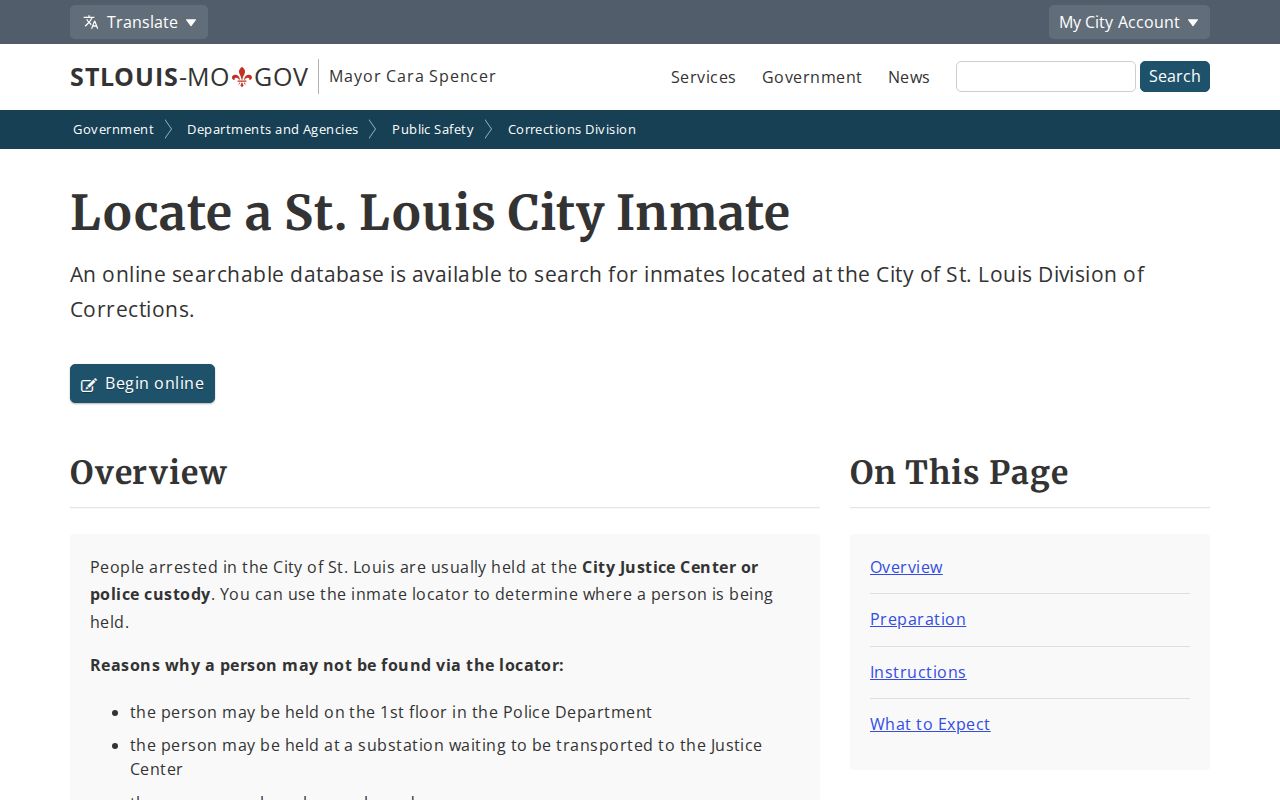
Pair the instructions with the live locator. That way a missing result reads as one search outcome, not a final word on whether an arrest happened. Run it again later if you need to be sure.
St. Louis City Busted Roster Search
The City Justice Center locator is the closest thing St. Louis City has to an official busted roster. It is not a full historical booking feed. Two views matter. Active Inmates shows who is in custody right now. Released in the past 72 hours gives a short window on recent releases. Both are custody snapshots, nothing more, and neither stands in for a court docket or an agency-held record. The locator has a photo area, though visitors may hit an unavailable-photo notice, so public photo access is conditional at best.
| Search field or view | Use and limit |
|---|---|
| First and last name | The city instructions call for exact matching. Similar spellings may not return a result. |
| Active Inmates | Current City Justice Center custody as displayed, not an arrest history. |
| Released in past 72 hours | A recent release listing, not proof of dismissal, acquittal, or expungement. |
| Facility and status | Current operational fields that can change after transfer, release, or correction. |
| Photo slot | A conditional public display. An unavailable slot is not proof that no agency image exists. |
City Justice Center custody often starts after police finish processing. Corrections says it cannot issue an incarceration letter for someone held only by SLMPD. City bond guidance draws the same line. It splits police custody under 24 hours from City Justice Center custody at and beyond that mark. This local split explains a familiar puzzle. A same-day lookup can come up empty while an agency is still working the arrest behind the scenes.
Note: Save the search date, name spelling, selected view, facility, and photo state before checking any later source, since live custody data shifts constantly.
St. Louis City Recent Busted Releases
There is no verified official daily booking log for St. Louis City. No bulk feed exists either. No CSV export appears in the public sources. The closest official route is the short recent-release window inside the City Justice Center locator, which can show someone already booked and possibly out. Keep its limits in mind. A name can surface in a police report before any custody entry, and a person can leave the locator before a court docket catches up.
SLMPD posts weekday incident summaries on its Crime and Investigations page, with the caveat that details are preliminary. The city's inmate-population dashboard offers aggregate numbers only. It is not a booking count, a release list, or a photo source. The Justice Center's stated capacity of 860 says nothing about how many arrests happened.
News stories pick and choose. A reporter may name a charge before the city locator shows any custody transfer. Treat a news item as context, the Justice Center locator as the custody check, and the official request process as the way to get the record itself. Crime News covers the city's media landscape in more depth, keeping individual reports apart from official sources.
St. Louis City Court and DOC Paths
A booking snapshot only tells part of the story. For what happened next, the court file is the source that matters, and the locator points to two routes: Missouri Case.net and the St. Louis Municipal Courts. Search by case number whenever the locator gives you one. Name searches can pull up more than one person, so confirm the jurisdiction and case details before assuming a match. Labels like "released" or "bond" describe jail status, not a court outcome.
Someone serving a state sentence or living under active supervision appears in the Missouri Department of Corrections Offender Search. That tool covers active offenders, including some on probation or parole, but not people who have been discharged. It will not show a same-day city arrest, and many profiles carry no photo. For MODOC records questions, Constituent Services answers at 573-751-2389.
Federal and immigration custody sit on entirely separate systems. The Federal Bureau of Prisons locator tracks federal inmates, and ICE runs its own detainee search. Neither replaces a City Justice Center booking lookup. A transfer can explain why someone vanished from city custody, but matching agency, date, court, and case information is the only way to link records across systems.
St. Louis City Busted Custody States
Every official channel captures a different moment in time. Sorting these states apart matters. Otherwise you might mistake an old court result for current jail custody, or read a brief released-view entry as a final decision from a judge.
| Record state | Best official starting point | What it does not prove |
|---|---|---|
| Police custody or transport | SLMPD Prisoner Processing and city instructions | That the person will appear in the City Justice Center active view immediately. |
| Current City Justice Center custody | Active Inmates locator | That the charge is final or every record field is complete. |
| Released within 72 hours | Recent-release locator view | That a case was dismissed or the person is no longer involved in court. |
| Filed court case | Case.net, Municipal Court, or Circuit Clerk | Current physical custody. |
| State custody or supervision | MODOC Offender Search | The original City Justice Center booking details. |
A question about an active warrant or a wanted-subject card goes to the official Missouri warrant route. Contact the agency that issued it. Regional CrimeStoppers cards are simply tip requests. They are not booking records. They also say nothing about who sits in custody right now. For the city's warrant-check and safe tip process, see Most Wanted Fugitives.
St. Louis City Historical Record Boundaries
Older material deserves a clear label. The Missouri State Archives hold historical corrections photographs, with state-prison series being especially rich, and the St. Louis Archives research room can shed light on older local court context. The St. Louis Public Library's Special Collections unit supports historical research too. None of these is a live City Justice Center roster. The facility name and date range tell you whether an old image came from a state institution, a court collection, or a city file.
Begin modern requests with SLMPD or City Corrections. For genuinely historical matters, the St. Louis Public Library Special Collections and state archives can help identify the right collection. Always name the source type in your description. An old photograph proves nothing about custody, a case, or any outcome today.
St. Louis Busted Mugshots
St. Louis is the only incorporated place here. Its record path runs entirely through city channels: SLMPD arrests, early police processing, City Justice Center custody, and SLMPD records requests. A page covering St. Louis County municipalities would deal with a different government's systems altogether. The dedicated St. Louis Busted Mugshots page walks through the city boundary, the early-custody gap, uneven local coverage, and the city-level records route.
Go to official sources first. Local news and third-party directories can be spotty, often slap a vague "St. Louis" label on entries, or recycle stale data. A missing entry on some aggregator site does not mean no arrest happened. Verify the facility, agency, and jurisdiction through the city's own locator and records custodians.
Public Record Search
Sponsored Results